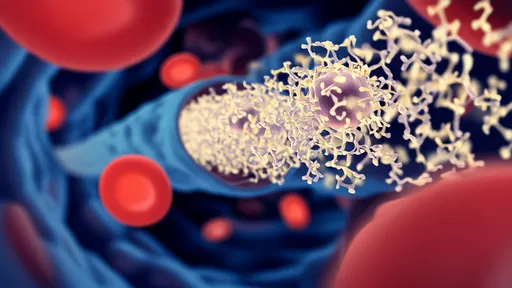
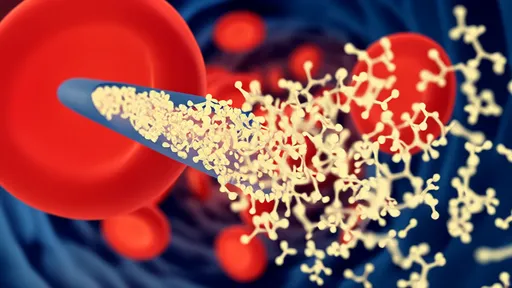
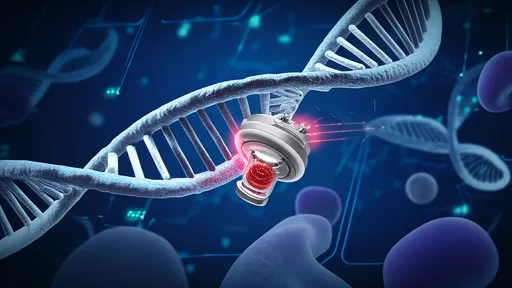
In a groundbreaking development that could revolutionize cellular therapy, scientists have engineered red blood cells to act as precision couriers for delivering healthy mitochondria to damaged tissues. This innovative approach, dubbed the "mitochondrial delivery alliance," harnesses the body's own transport systems to address a fundamental cause of many degenerative diseases.
The research builds upon a decade of work exploring how mitochondria - often called the powerhouses of cells - can be transferred between cells to restore function. While previous attempts at mitochondrial transplantation showed promise, the challenge of targeted delivery has remained a significant hurdle. The new method cleverly modifies erythrocytes, which naturally circulate throughout the body, to carry functional mitochondria to specific sites of need.
Red blood cells make ideal delivery vehicles for several reasons. Their lack of nuclei and mitochondria (in mature form) creates space for therapeutic payloads, while their natural abundance and long circulation time (up to 120 days) allow for sustained treatment effects. Moreover, their flexible membrane structure enables loading of relatively large organelles like mitochondria without compromising cell integrity.
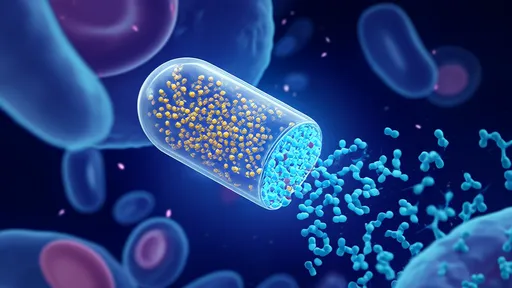
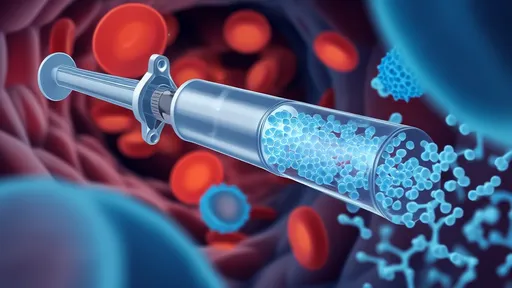
The engineering process involves several sophisticated steps. First, donor mitochondria are isolated from healthy cells and modified with targeting molecules. These mitochondria are then loaded into red blood cells that have been temporarily made more permeable. Once inside, the erythrocytes reseal their membranes, effectively trapping the mitochondria while maintaining normal cellular function.
What makes this approach particularly exciting is its potential applications. In animal models, the engineered cells have successfully delivered mitochondria to heart tissue after myocardial infarction, to neurons in stroke models, and to muscle tissue in mitochondrial myopathy cases. The treatment appears to reduce cell death, improve tissue function, and in some cases, stimulate regeneration.
The team discovered that the modified red blood cells naturally accumulate at sites of inflammation and tissue damage - a property that enhances their therapeutic targeting. This homing behavior appears to be mediated by changes in blood vessel permeability and signaling molecules released by damaged tissues, creating a perfect storm for precise mitochondrial delivery exactly where needed.
Safety studies have been encouraging so far. The body's natural clearance mechanisms appear to handle the modified red blood cells normally, and no significant immune reactions have been observed. This is crucial because previous mitochondrial transplantation approaches sometimes triggered inflammatory responses that limited their effectiveness.
One particularly promising aspect is the potential for treating rare mitochondrial diseases. These genetic disorders, which affect about 1 in 5,000 people, currently have no cure and limited treatment options. The ability to deliver healthy mitochondria to affected tissues could fundamentally change the prognosis for these patients.
The researchers are now optimizing several parameters - including the number of mitochondria per red blood cell, dosing frequency, and methods to enhance mitochondrial uptake by target cells. Early results suggest that multiple small doses may be more effective than single large doses, possibly because it mimics the body's natural processes of mitochondrial transfer.
Looking ahead, the team envisions creating "universal donor" red blood cells that could be stocked in blood banks for emergency use. Such cells could be rapidly loaded with mitochondria and administered in situations like heart attacks or traumatic injuries where timely mitochondrial delivery could prevent irreversible tissue damage.
While much work remains before clinical application, the potential impact of this technology is enormous. By leveraging the body's own delivery systems, scientists may have found a way to overcome one of the biggest challenges in cellular therapy - getting therapeutic cargo exactly where it's needed, when it's needed, and in the right amounts.
The mitochondrial delivery alliance represents a beautiful convergence of cell biology, bioengineering, and medical need. As research progresses, we may be witnessing the dawn of a new era in regenerative medicine - one where our cells' power plants can be repaired or replaced as easily as changing batteries in a flashlight.

By /Aug 18, 2025
By /Aug 18, 2025
By /Aug 18, 2025

By /Aug 18, 2025

By /Aug 18, 2025

By /Aug 18, 2025

By /Aug 18, 2025

By /Aug 18, 2025

By /Aug 18, 2025
By /Aug 18, 2025
By /Aug 18, 2025
By /Aug 18, 2025
By /Aug 18, 2025
By /Aug 18, 2025
By /Aug 18, 2025
By /Aug 18, 2025
By /Aug 18, 2025
By /Aug 18, 2025
By /Aug 18, 2025
By /Aug 18, 2025
