Plastic-Eating Microbes: Degradation Pathway of Polyvinyl Chloride by Gut Bacteria of Galleria Mellonella"

Aug 18, 2025 By

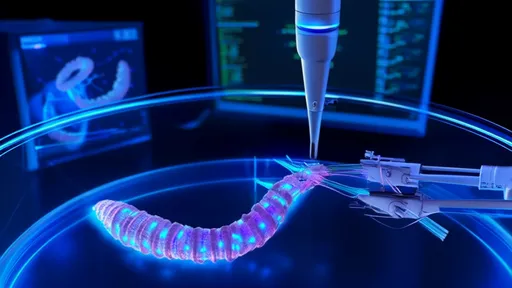
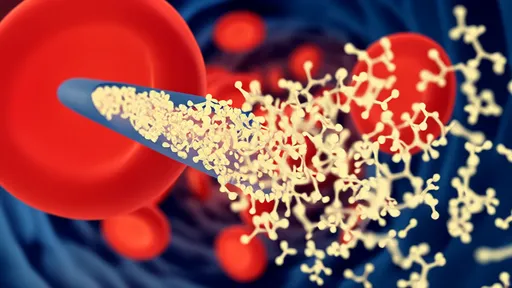
In a groundbreaking discovery that could revolutionize plastic waste management, researchers have identified a unique microbial pathway for degrading polyvinyl chloride (PVC) within the gut of greater wax moth larvae. These "plastic-eating" microorganisms, residing in the digestive system of Galleria mellonella, demonstrate an unprecedented ability to break down one of the most stubborn synthetic polymers plaguing our planet.

The scientific community has been buzzing with excitement since the initial observation of wax worms chewing through polyethylene shopping bags. However, the recent identification of PVC-degrading activity represents a significant leap forward. PVC presents particular challenges due to its chlorine content and complex structure, making conventional biodegradation nearly impossible under natural conditions.

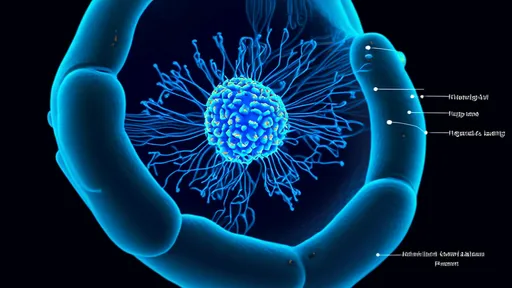
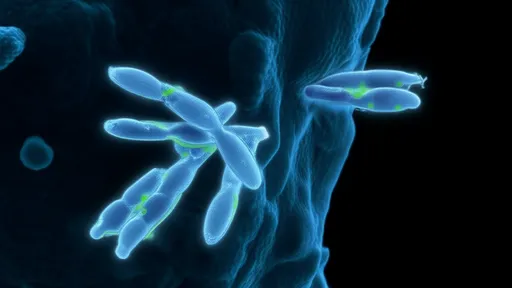
What makes this discovery truly remarkable is the symbiotic relationship between the wax moth larvae and their gut microbiota. The insects don't directly digest the plastic themselves, but rather serve as hosts for specialized bacteria that have evolved unique metabolic pathways. These microbial plastic devourers appear to work in concert, with different strains handling various stages of the breakdown process.

Researchers at the Spanish National Research Council (CSIC) have been at the forefront of this investigation. Their latest findings reveal that the degradation occurs through a two-phase mechanism. First, physical fragmentation by the larvae's chewing creates increased surface area. Then, enzymatic action from at least four identified bacterial strains begins the chemical decomposition, with particular enzymes targeting the carbon-chlorine bonds that make PVC so resistant to degradation.

The microbial consortium includes members of the Enterobacteriaceae family along with several newly characterized species. Genetic analysis shows these bacteria possess clusters of genes not found in their non-plastic-degrading relatives. These genetic elements code for enzymes capable of oxidizing and cleaving polymer chains, then further breaking down the resulting fragments into simpler compounds that can enter standard metabolic pathways.

Perhaps most encouraging is the apparent speed of this biodegradation process. Laboratory measurements show noticeable PVC breakdown within 48 hours of ingestion - exponentially faster than the centuries required for environmental degradation. The bacteria appear to use the plastic not just as a physical substrate but as an actual energy source, with metabolic byproducts including harmless organic acids and alcohols.

The ecological implications are profound. PVC accounts for approximately 10% of global plastic production, used extensively in construction materials, medical devices, and consumer products. Current disposal methods often involve landfilling or incineration, both carrying significant environmental costs. If harnessed effectively, these plastic-degrading microbes could transform waste management strategies worldwide.

However, researchers caution that scaling this biological process presents considerable challenges. The precise conditions within the wax worm gut - including pH levels, enzymatic concentrations, and microbial interactions - may be difficult to replicate industrially. There are also concerns about controlling the breakdown to avoid unintended decomposition of PVC products still in use.

Several biotech companies have already begun exploring commercial applications. One approach involves isolating the key enzymes for use in bioremediation facilities. Another strategy examines breeding the bacterial strains for large-scale fermentation. The most ambitious projects aim to create synthetic microbial communities optimized for different PVC waste streams.

Beyond practical applications, this discovery provides fascinating insights into microbial evolution. The ability to degrade synthetic materials that didn't exist a century ago demonstrates the remarkable adaptability of bacterial genomes. Scientists speculate that these microbes may have repurposed existing metabolic pathways originally used for breaking down similar natural compounds like plant resins or waxes.

Ongoing research is focusing on enhancing the efficiency of this biodegradation. Recent experiments with microbial consortia in controlled bioreactors have shown promising results, achieving up to 60% mass reduction of PVC samples within two weeks. Genetic engineering approaches are being explored to boost enzyme production and stability.

The wax worm gut microbiome continues to surprise researchers. New sequencing technologies have revealed additional bacterial species that may play supporting roles in the degradation process. Some appear to specialize in processing plastic additives like phthalates, which are often more environmentally hazardous than the PVC polymer itself.

Environmental scientists emphasize that biological solutions shouldn't replace efforts to reduce plastic production and improve recycling. However, for the millions of tons of PVC waste already accumulating in landfills and oceans, these plastic-eating microbes may offer a much-needed remediation tool. Field trials are being planned to test the effectiveness of inoculated bacteria in controlled waste treatment environments.

As research progresses, the scientific community remains cautiously optimistic. The discovery of PVC degradation pathways in wax worm gut bacteria represents more than just a potential technological solution - it provides hope that nature may already be developing responses to human-made environmental challenges. With careful study and responsible application, these microscopic plastic devourers could become powerful allies in the fight against plastic pollution.

The journey from laboratory curiosity to practical solution will require interdisciplinary collaboration among microbiologists, materials scientists, and environmental engineers. Funding agencies worldwide are increasing support for this promising line of research, recognizing its potential to address one of the most persistent waste problems of our time.

While questions remain about long-term stability, energy balance, and byproduct management, the fundamental breakthrough has been made. Nature, through the unassuming greater wax moth and its intestinal microbes, has shown us a possible path forward for dealing with our plastic legacy. The coming years will reveal whether we can effectively harness this biological wisdom to create a cleaner future.
Recommend Posts
Biology

Artemisinin Metabolic Flux Analysis: Real-time Monitoring of Artemisinin Biosynthesis Flux Technology

By /Aug 18, 2025

In a groundbreaking advancement for plant metabolic engineering, researchers have successfully developed a novel "metabolic flowmeter" technology that enables real-time monitoring of artemisinin biosynthesis in Artemisia annua (sweet wormwood). This innovation promises to revolutionize how scientists understand and optimize the production of this life-saving antimalarial compound.
Biology

Silk 'Quantum Dot Fabric': Fluorescent Biomaterial Produced by Genetically Edited Silkworms"

By /Aug 18, 2025

In a groundbreaking development at the intersection of biotechnology and materials science, researchers have successfully harnessed the power of gene-edited silkworms to produce fluorescent silk infused with quantum dots. This innovation opens up a new frontier in sustainable biomaterials, merging ancient sericulture with cutting-edge nanotechnology. The team, led by molecular biologists at a consortium of Asian universities, has published their findings in Nature Materials, revealing how CRISPR-Cas9 modifications enable silkworms to spin silk that naturally incorporates light-emitting nanoparticles.
Biology

Understanding the CO₂ Concentration Mechanism of Submerged Chloroplasts in Rice: The Flood Resistance Respirator"

By /Aug 18, 2025

In a groundbreaking discovery that could revolutionize flood-resistant crop breeding, an international team of scientists has unraveled the mystery behind rice's remarkable ability to perform photosynthesis underwater. The research, published in Nature Plants, reveals an ingenious biological adaptation that allows submerged rice plants to concentrate carbon dioxide in their chloroplasts - essentially creating an evolutionary "snorkel" for survival during floods.
Biology

Snow Leopard's Blood Oxygen Superpower": The High-Altitude Adaptation Code of Hemoglobin Conformational Change

By /Aug 18, 2025

The snow leopard, an elusive and majestic big cat roaming the high-altitude ranges of Central and South Asia, has long fascinated scientists with its remarkable ability to thrive in oxygen-deprived environments. Recent research has uncovered a fascinating biological secret behind this adaptation: a unique hemoglobin structure that allows these predators to efficiently utilize oxygen where most mammals would struggle to survive. This discovery not only sheds light on the snow leopard's evolutionary journey but also opens new avenues for understanding hypoxia-related challenges in human medicine.
Biology

Genetic Passport of Northeast Tigers: Protection Plan for the Genetic Diversity of Changbai Mountain Population"

By /Aug 18, 2025

The vast forests of Northeast China's Changbai Mountain region have long served as a critical stronghold for the endangered Amur tiger, commonly known as the Siberian tiger. Recent breakthroughs in genetic research have unveiled a groundbreaking initiative—the "Genetic Passport" program—aimed at preserving the genetic diversity of this iconic subspecies. This ambitious conservation effort combines cutting-edge science with on-the-ground wildlife management to secure the future of these majestic predators.
Biology

Photovoltaic Highway of Leaves: Biomimetic Design of C4 Plant Vascular Bundle Light-Guiding Structures"

By /Aug 18, 2025

In a groundbreaking fusion of botany and renewable energy technology, researchers are turning to the intricate vascular systems of C4 plants as blueprints for next-generation photovoltaic highways. The concept, which sounds like science fiction, draws direct inspiration from the sophisticated light-channeling mechanisms found in leaves of crops like maize and sugarcane. These natural solar optimizers have evolved over millions of years to achieve remarkable photosynthetic efficiency - and now their secrets are being adapted for human infrastructure.
Biology

Vibration Password Lock: Specific Hertz Sound Waves Activate Germination Gene Pathways"

By /Aug 18, 2025

In a groundbreaking discovery that bridges botany with acoustic physics, researchers have unraveled nature's best-kept secret: seeds respond to vibrational "passwords" encoded in specific sound frequencies. This phenomenon, now termed "vibrational germination lock," reveals how certain plant species evolved to remain dormant until detecting precise harmonic signatures from their ecosystems—a biological security system refined over millennia.
Biology

Carbon Economic Game in Trees: A Nash Equilibrium Model for Resource Allocation in Mycorrhizal Networks"

By /Aug 18, 2025

In the intricate dance of forest ecosystems, a fascinating economic game plays out beneath our feet. The symbiotic relationship between trees and mycorrhizal fungi has long fascinated scientists, but new research reveals this partnership operates under sophisticated economic principles. A groundbreaking Nash equilibrium model now explains how these organisms negotiate resource allocation through vast underground networks, balancing cooperation and competition in a delicate biological marketplace.
Biology

Thermodynamic Deception of Flowers: Corpse Mimicry in Amorphophallus Temperature Fluctuations"

By /Aug 18, 2025

The botanical world is full of deceptive strategies, but few are as bizarrely effective as the thermodynamic trickery employed by the infamous Amorphophallus titanum, commonly known as the corpse flower. This colossal plant, native to the rainforests of Sumatra, has evolved a macabre yet ingenious method to attract pollinators: it mimics the temperature fluctuations of decomposing flesh. The phenomenon, dubbed the "thermodynamic deception," reveals how plants can manipulate heat as a sensory lure—a tactic so refined it blurs the line between flora and the animal behaviors they exploit.
Biology

Quantum Gravitropism in Roots: Quantum Coherence Mechanism of Statocytes in Arabidopsis

By /Aug 18, 2025

In a groundbreaking study that bridges quantum biology and plant physiology, researchers have uncovered compelling evidence of quantum coherence mechanisms within Arabidopsis thaliana root statocytes—the specialized gravity-sensing cells that enable plants to orient their growth. The findings, published this week in Nature Plant Biology, suggest these cells may exploit quantum vibrational states to achieve extraordinary sensitivity to gravitational fields, challenging classical models of graviperception.
Biology

AI Virus Storm Forecast": Deep Learning Simulates Cross-Species Transmission Chains

By /Aug 18, 2025

The scientific community is abuzz with a groundbreaking development in pandemic forecasting. Researchers have successfully employed deep learning algorithms to simulate complex cross-species viral transmission chains, potentially revolutionizing our approach to preventing future outbreaks. This innovative technique, dubbed "Viral Storm Prediction," offers unprecedented insights into how pathogens might jump between animals and humans.
Biology

Acoustic Stealth Cloak: Ultrasound Disruption Shields Immune Cells from Recognition"

By /Aug 18, 2025

In a groundbreaking development that could revolutionize organ transplants and immunotherapy, scientists have unveiled a novel "acoustic invisibility cloak" capable of shielding transplanted organs from immune rejection using precisely tuned ultrasonic waves. This radical approach manipulates the body's natural defense mechanisms at a fundamental level, offering hope for millions awaiting life-saving transplants while circumventing the debilitating side effects of immunosuppressive drugs.
Biology

Lysosome-Targeting Nanocapsules for Precise Elimination of Zombie Cells

By /Aug 18, 2025

In a groundbreaking development that could redefine aging and age-related disease treatment, scientists have unveiled a novel "smart bullet" technology designed to precisely eliminate senescent cells—the so-called "zombie cells" that accumulate with age and contribute to tissue dysfunction. This innovative approach, termed lysosome-targeted activating nanocapsules (LTAN), represents a quantum leap in targeted senolytic therapies, combining the precision of biological targeting with the controlled release capabilities of advanced nanomaterials.
Biology

Mitochondrial Express Alliance": Engineering Red Blood Cells to Deliver Healthy Mitochondria

By /Aug 18, 2025

In a groundbreaking development that could revolutionize cellular therapy, scientists have engineered red blood cells to act as precision couriers for delivering healthy mitochondria to damaged tissues. This innovative approach, dubbed the "mitochondrial delivery alliance," harnesses the body's own transport systems to address a fundamental cause of many degenerative diseases.
Biology

Magnetic Nanobots Rebuild Spinal Cord Neural Pathways"

By /Aug 18, 2025

In a groundbreaking development that could revolutionize spinal cord injury treatment, scientists have successfully demonstrated the use of magnetically controlled nanorobots to reconstruct neural pathways in damaged spinal cords. This innovative approach, dubbed "magnetic neural weaving," represents a significant leap forward in regenerative medicine and offers new hope for patients with paralysis.
Biology

Cancer Metastasis Cryo-Gun": Biomimetic Hydrogel to Block Circulating Tumor Cells

By /Aug 18, 2025

In a groundbreaking advancement that could revolutionize cancer treatment, researchers have unveiled a bioinspired hydrogel system capable of trapping circulating tumor cells (CTCs) like a biological "freeze gun." This innovative approach, modeled after natural mechanisms, offers new hope for preventing metastatic spread—the primary cause of cancer-related deaths worldwide.
Biology

Plastic-Eating Microbes: Degradation Pathway of Polyvinyl Chloride by Gut Bacteria of Galleria Mellonella"

By /Aug 18, 2025

In a groundbreaking discovery that could revolutionize plastic waste management, researchers have identified a unique microbial pathway for degrading polyvinyl chloride (PVC) within the gut of greater wax moth larvae. These "plastic-eating" microorganisms, residing in the digestive system of Galleria mellonella, demonstrate an unprecedented ability to break down one of the most stubborn synthetic polymers plaguing our planet.
Biology

Protein Brain-Pass Smart Key": AI-Designed Shuttle Peptides for Crossing the Blood-Brain Barrier

By /Aug 18, 2025

For decades, the blood-brain barrier (BBB) has stood as a formidable gatekeeper, shielding the brain from harmful substances while frustrating efforts to deliver life-saving therapeutics. This selective membrane, while essential for protecting neural tissue, has rendered nearly 98% of potential neuroactive drugs ineffective due to their inability to penetrate its defenses. Now, a groundbreaking approach leveraging artificial intelligence has yielded a potential master key—a class of engineered peptides capable of shuttling payloads across this biological fortress.
Biology

Epigenetic Erasers: Cellular Age Regression" Reverses the Clock of Skin Fibroblasts

By /Aug 18, 2025

In a groundbreaking development that blurs the line between science fiction and reality, researchers have demonstrated the ability to roll back the biological clock of human skin cells using targeted epigenetic reprogramming. This pioneering approach, dubbed "cellular age reversal," leverages molecular tools to erase accumulated epigenetic marks without altering the underlying genetic code – effectively restoring youthful functionality to aged cells.
Biology

DNA Light-Controlled Drone": Near-Infrared Light Drives CRISPR to Target Brain Lesions

By /Aug 18, 2025

In a groundbreaking fusion of biotechnology and photonics, researchers have unveiled a novel "DNA photodrone" system capable of delivering CRISPR gene-editing tools to precise brain targets using near-infrared light. This innovative approach promises to revolutionize the treatment of neurological disorders by overcoming the blood-brain barrier and achieving unprecedented spatial-temporal control over gene editing.