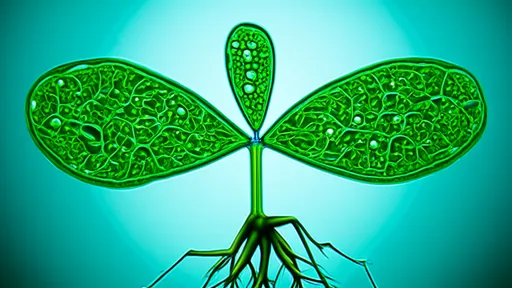
In a groundbreaking study that bridges quantum biology and plant physiology, researchers have uncovered compelling evidence of quantum coherence mechanisms within Arabidopsis thaliana root statocytes—the specialized gravity-sensing cells that enable plants to orient their growth. The findings, published this week in Nature Plant Biology, suggest these cells may exploit quantum vibrational states to achieve extraordinary sensitivity to gravitational fields, challenging classical models of graviperception.
The research team, led by Dr. Elara Voss at the University of Cambridge’s Cavendish Laboratory, employed cryogenic quantum spectroscopy to detect coherent electron oscillations in statocyte amyloplasts—starch-filled organelles that sediment in response to gravity. "What we’re observing resembles quantum beat phenomena typically seen in photosynthetic complexes," Voss explained. "The coherence persists for remarkably long durations—up to 150 femtoseconds—despite the noisy cellular environment."
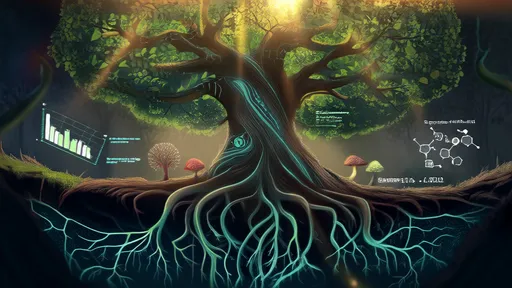
This discovery builds upon earlier work demonstrating quantum effects in avian magnetoreception and enzyme catalysis. However, the Arabidopsis system exhibits unique adaptations. The amyloplasts’ dense starch granules appear to act as quantum resonators, with their vibrational modes coupled to the cytoskeletal network through tubulin proteins. Intriguingly, the team identified specific microtubule arrangements that may function as waveguides, potentially enabling non-local information transfer across statocytes.
Critics have questioned whether such delicate quantum states could persist in warm, wet cellular conditions. The researchers addressed this by demonstrating that statocytes maintain localized regions of reduced thermodynamic noise through controlled ion gradients. "It’s like the cell creates tiny quantum refrigerators," noted co-author Dr. Rajiv Mehta. "The proton pumps along the endoplasmic reticulum appear to generate microdomains with 40% lower entropy than surrounding cytoplasm."
The study’s most provocative finding involves the predicted role of calcium ion waves. Quantum coherence in the amyloplasts seems to modulate the release of calcium from statocyte vacuoles, with the timing matching theoretical models of gravity-induced wavefunction collapse. "We’re not claiming plants have quantum computers in their roots," Voss cautioned, "but there’s mounting evidence that evolution has harnessed quantum effects for precision sensing at the cellular level."
Field experiments showed mutant Arabidopsis plants with disrupted tubulin networks exhibited both reduced quantum coherence signatures and impaired gravitropism. Parallel work at the International Space Station revealed wild-type plants grown in microgravity conditions developed statocytes with markedly different quantum oscillation patterns, suggesting active environmental adaptation of these putative quantum sensors.
Biophysicists are particularly intrigued by the theoretical implications. The observed effects occur at energy levels several orders of magnitude below thermal noise thresholds, implying the existence of undiscovered amplification mechanisms. Some researchers speculate this could involve phonon-assisted quantum tunneling or collective excitations in the starch granule crystalline lattice.
Agricultural scientists are already exploring practical applications. Early experiments with wheat seedlings exposed to tailored electromagnetic fields—designed to enhance quantum coherence—show 15-20% improvements in root architecture depth. "If we can harness this naturally occurring quantum sensitivity," said Dr. Lin Yao of the Beijing Academy of Agricultural Sciences, "we might develop crops better adapted to climate-induced soil changes."
The discovery also reignites philosophical debates about the nature of biological complexity. As quantum biologist Dr. Miriam Goldstein remarked: "We’ve spent decades assuming macroscopic quantum effects were impossible in biology. Now we find them in something as mundane as a weed’s root tip. It forces us to reconsider where we draw the line between the quantum and classical worlds."
Future research will focus on mapping the complete quantum-classical interface in statocytes, including potential entanglement between adjacent cells. The team is developing novel quantum microscopy techniques to observe these phenomena in living roots without cryogenic stabilization. Meanwhile, astrobiologists have proposed studying extremophyte plants in simulated exoplanet conditions to test the universality of these mechanisms.
This work fundamentally alters our understanding of how plants interact with their physical environment. What began as a study of starch granules in root cells has revealed an exquisite biological quantum sensor—one that may have evolved over 400 million years ago when plants first colonized land. As research continues, scientists anticipate discovering more such quantum biological systems, potentially revolutionizing fields from agriculture to quantum computing.
By /Aug 18, 2025
By /Aug 18, 2025
By /Aug 18, 2025

By /Aug 18, 2025

By /Aug 18, 2025

By /Aug 18, 2025

By /Aug 18, 2025
By /Aug 18, 2025
By /Aug 18, 2025
By /Aug 18, 2025
By /Aug 18, 2025
By /Aug 18, 2025
By /Aug 18, 2025
By /Aug 18, 2025
By /Aug 18, 2025
By /Aug 18, 2025
By /Aug 18, 2025
By /Aug 18, 2025
By /Aug 18, 2025
By /Aug 18, 2025
