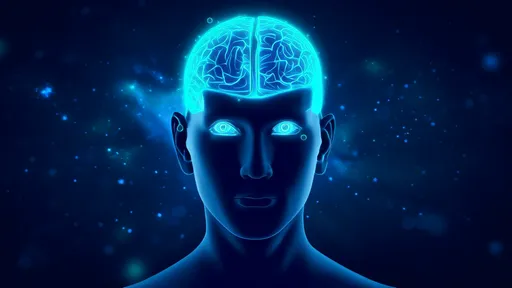
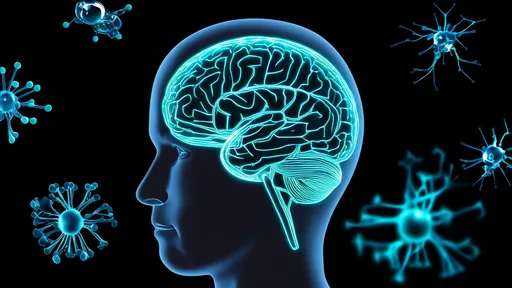
In the ever-evolving landscape of neuroscience, the mapping and deciphering of the brain's intricate wiring—known as the connectome—has emerged as one of the most ambitious and transformative endeavors of our time. The human brain, with its billions of neurons and trillions of connections, represents perhaps the most complex biological structure known to science. For decades, researchers have sought to unravel its mysteries, but it is only in recent years that technology has begun to catch up with ambition, enabling unprecedented insights into the neural circuits that underpin everything from basic motor functions to the complexities of human consciousness.
The concept of the connectome is not merely a static map of neuronal pathways; it is a dynamic blueprint that captures the living, breathing architecture of the brain. Early efforts, such as the groundbreaking work on the Caenorhabditis elegans connectome, provided a foundational understanding, but scaling this to mammalian brains has required revolutionary advances in imaging, computational power, and data analysis. Today, initiatives like the Human Connectome Project and various large-scale brain research programs worldwide are pushing the boundaries, generating petabytes of data that depict the brain's structural and functional networks in exquisite detail.
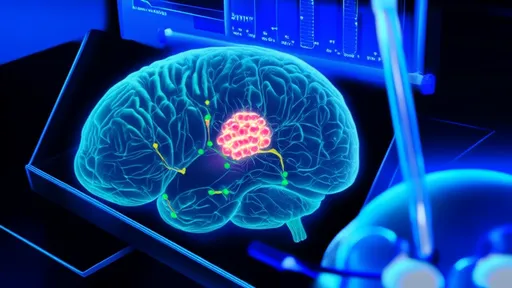
Central to this progress is the development of high-resolution imaging techniques. Diffusion tensor imaging (DTI) and functional magnetic resonance imaging (fMRI) have allowed scientists to non-invasively trace white matter tracts and observe neural activity in real time. Meanwhile, electron microscopy and advanced light microscopy methods are enabling reconstructions of neural circuits at synaptic resolution in animal models. These technological leaps are not just about seeing more; they are about seeing differently—revealing patterns and connections that were previously invisible.
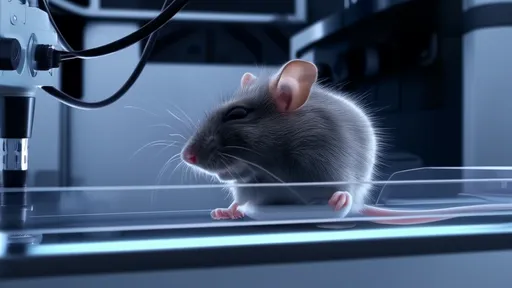
But mapping is only the first step. The true challenge lies in interpretation: What do these connections mean? How do they give rise to behavior, cognition, and disease? This is where the field of circuit reconstruction and analysis comes into play. By integrating connectomic data with genetic, physiological, and behavioral information, researchers are beginning to decode the logic of neural circuits. For instance, studies in model organisms have shown how specific circuits control behaviors like fear, aggression, or social interaction, providing a template for understanding similar processes in humans.
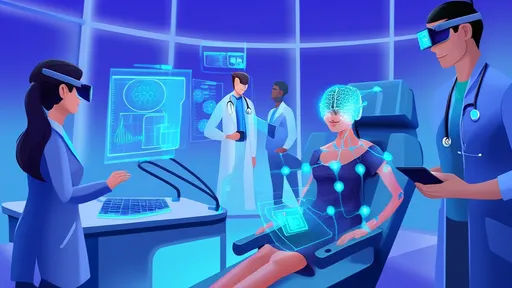
One of the most promising applications of connectomics is in the realm of neurological and psychiatric disorders. Conditions such as schizophrenia, autism spectrum disorder, and depression are increasingly viewed as disorders of brain connectivity. Alterations in synaptic strength, aberrant wiring, or imbalances in network dynamics may underlie these diseases. By comparing connectomes from healthy and affected individuals, scientists are identifying biomarkers and circuit-based mechanisms that could lead to new diagnostic tools and targeted therapies. For example, deep brain stimulation, which modulates specific neural circuits, has shown remarkable success in treating Parkinson's disease and is being explored for other conditions.
The reconstruction of neural circuits also sheds light on brain plasticity—the brain's ability to reorganize itself in response to experience, learning, or injury. From the formation of new synapses to the rewiring of entire networks, plasticity is a fundamental property that enables adaptation and recovery. Connectomic studies are revealing how these processes unfold at the cellular and systems levels, offering insights into rehabilitation strategies for stroke victims or individuals with traumatic brain injuries.
However, the path forward is fraught with challenges. The sheer scale of the data is daunting; reconstructing even a cubic millimeter of brain tissue can require years of effort and immense computational resources. Moreover, the connectome is not static—it changes over time, influenced by genetics, environment, and experience. Capturing this dynamism requires longitudinal studies and new analytical frameworks that can handle temporal dimensions. Ethical considerations also loom large, particularly as connectomic technologies become more invasive or capable of decoding private thoughts and intentions.
Despite these hurdles, the potential rewards are immense. A comprehensive understanding of neural circuits could revolutionize not only medicine but also artificial intelligence, inspiring new algorithms and architectures that mimic the brain's efficiency and flexibility. It might even address profound philosophical questions about the nature of self and consciousness, grounding abstract concepts in tangible biological substrates.
In conclusion, the reconstruction and parsing of the connectome represent a pivotal chapter in neuroscience, blending cutting-edge technology with deep biological inquiry. As methods continue to improve and collaborations expand across disciplines, we are inching closer to a holistic understanding of the brain's wiring diagram. This journey is not just about creating a map; it is about learning to read it—to interpret the language of neurons and synapses that defines who we are. The connectome, in all its complexity, is the next frontier, and its exploration promises to reshape our future in ways we are only beginning to imagine.
By /Aug 25, 2025
By /Aug 25, 2025
By /Aug 25, 2025
By /Aug 25, 2025
By /Aug 25, 2025

By /Aug 25, 2025
By /Aug 25, 2025

By /Aug 25, 2025

By /Aug 25, 2025

By /Aug 25, 2025

By /Aug 25, 2025

By /Aug 25, 2025

By /Aug 25, 2025

By /Aug 25, 2025

By /Aug 25, 2025

By /Aug 25, 2025

By /Aug 25, 2025
By /Aug 25, 2025
By /Aug 25, 2025
By /Aug 25, 2025
