The pharmaceutical industry stands at the precipice of a transformative era, driven by the relentless advancement of artificial intelligence. For decades, the process of discovering a new therapeutic compound has been a monumental undertaking, often described as finding a needle in a haystack. It is a journey fraught with astronomical costs, a high rate of failure, and a timeline that can stretch beyond a decade. Traditional methods, reliant on brute-force screening of vast chemical libraries and serendipitous discoveries, are increasingly seen as unsustainable. In this challenging landscape, AI-assisted drug design has emerged not merely as an incremental improvement, but as a paradigm shift, promising to redefine the very essence of how medicines are conceived, designed, and brought to patients.
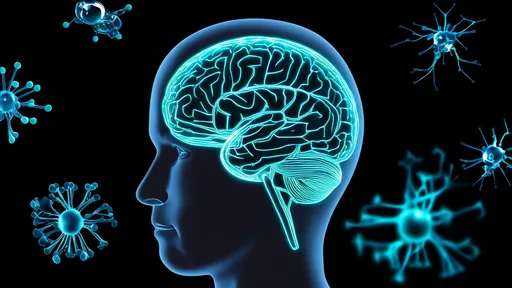
The core of this revolution lies in the ability of machine learning algorithms to discern complex, non-linear patterns within immense and multifaceted datasets. These datasets encompass everything from genomic sequences and protein structures to historical clinical trial results and real-world patient data. Unlike human researchers, who can be limited by cognitive biases and the sheer volume of information, AI systems can process this data with unparalleled speed and objectivity. They can identify subtle correlations between a compound's molecular structure and its potential biological activity, toxicity, and pharmacokinetic properties—insights that would likely remain hidden through conventional analysis.
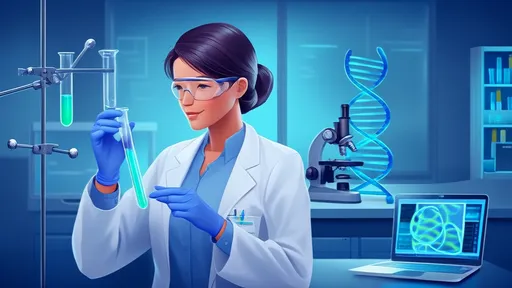
One of the most significant applications is in virtual screening. Instead of physically testing millions of compounds in a lab, which is exorbitantly expensive and time-consuming, AI models can be trained to predict which molecules are most likely to bind to a specific disease target, such as a protein implicated in cancer or a neurological disorder. These in silico experiments can rapidly narrow down a list of millions of candidates to a few hundred highly promising leads, allowing human chemists and biologists to focus their experimental efforts only on the most viable options. This dramatically accelerates the initial hit identification phase, shaving months or even years off the early discovery timeline.
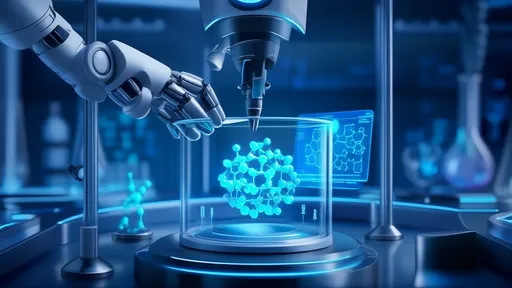
Beyond simple screening, AI is enabling the de novo design of novel drug molecules. Using generative models, similar to those that create art or music, researchers can now instruct an AI to design entirely new molecular structures from scratch that possess a desired set of properties. For instance, a scientist can specify the need for a molecule that strongly inhibits a particular enzyme, has high solubility, and low predicted cardiotoxicity. The AI can then generate a multitude of novel chemical entities that meet these precise criteria, exploring regions of chemical space that human intuition might never venture into. This moves drug discovery from a process of filtering what exists to one of creating what is optimally needed.
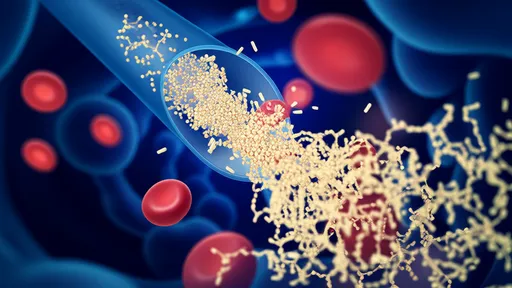
The predictive power of AI also extends deeply into the critical area of drug safety and efficacy. A predominant reason for clinical trial failure is unforeseen toxicity or a lack of desired effect in humans. Advanced AI models are now being employed to predict adverse effects long before a compound ever reaches a patient. By analyzing the structural features of a new drug candidate and comparing them to a vast database of known compounds and their side effects, these systems can flag potential safety issues early in the design process. This allows chemists to proactively modify the molecule to mitigate these risks, thereby increasing the likelihood that a drug will successfully navigate the costly later stages of development.
Furthermore, AI is proving invaluable in the repurposing of existing drugs. By analyzing complex patterns in biological data, AI can identify new therapeutic uses for drugs that have already been approved for other conditions. This strategy offers a tremendous advantage: since the safety profile of these drugs is already well-established in humans, they can bypass much of the early-stage development and proceed directly to later-phase clinical trials for the new indication. This can bring new treatment options to patients suffering from rare or neglected diseases at a fraction of the usual cost and time.
Despite its immense promise, the integration of AI into drug discovery is not without its challenges. The performance of any AI model is intrinsically linked to the quality, quantity, and diversity of the data it is trained on. Biased, incomplete, or noisy data can lead to flawed predictions and blind spots. The "black box" nature of some complex AI algorithms also presents a hurdle; when a model recommends a particular molecule, researchers need to understand the rationale behind that decision to trust it and to comply with regulatory standards. There is a growing field of research dedicated to Explainable AI (XAI) aimed at making these decisions more transparent and interpretable for human scientists.
Looking ahead, the future of AI-assisted drug design is one of ever-deeper integration and collaboration between human and machine intelligence. The role of the medicinal chemist is evolving from a sole inventor to that of a conductor, guiding and interpreting the creative output of AI systems. We are moving towards a future where the initial design of a drug candidate is a collaborative dialogue between researcher and algorithm. This synergy promises to unlock new therapeutic modalities for some of the most complex and debilitating diseases, from Alzheimer's to various cancers, heralding a new age of precision medicine that is faster, cheaper, and more effective than ever before.
The journey of a drug from concept to clinic will always require rigorous scientific validation, meticulous clinical testing, and unwavering regulatory oversight. However, with the powerful tool of artificial intelligence now firmly in the arsenal of researchers, that journey is becoming significantly less perilous. It is enabling a more rational, predictive, and efficient approach to healing, turning the once metaphorical search for a needle in a haystack into a precisely guided mission to build the perfect needle.
By /Aug 25, 2025
By /Aug 25, 2025
By /Aug 25, 2025
By /Aug 25, 2025
By /Aug 25, 2025
By /Aug 25, 2025
By /Aug 25, 2025

By /Aug 25, 2025

By /Aug 25, 2025
By /Aug 25, 2025

By /Aug 25, 2025
By /Aug 25, 2025
By /Aug 25, 2025
By /Aug 25, 2025

By /Aug 25, 2025
By /Aug 25, 2025

By /Aug 25, 2025
By /Aug 25, 2025
By /Aug 25, 2025
By /Aug 25, 2025
