The landscape of food safety testing is undergoing a profound transformation, driven by the urgent need for speed and accuracy in a globalized food supply chain. Traditional laboratory methods, while reliable, often involve time-consuming processes that can delay critical decisions, leading to potential public health risks and significant economic losses. In response, a wave of innovation is cresting, focused on the development of novel rapid detection methods. These advancements are not merely incremental improvements but represent a paradigm shift towards real-time, on-site analysis, empowering stakeholders from farm to fork with unprecedented tools to ensure food integrity.
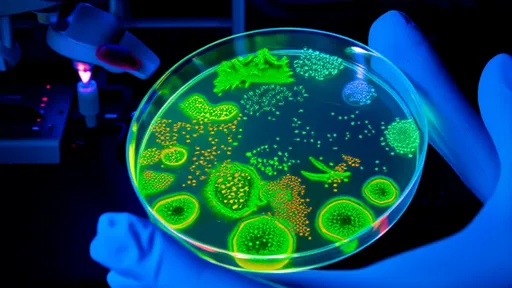
At the heart of this revolution are biosensors, sophisticated devices that combine a biological recognition element with a physicochemical transducer. The principle is elegantly simple: a biological component, such as an enzyme, antibody, or nucleic acid strand, specifically binds to the target contaminant—be it a pathogen like Salmonella or Listeria, a toxin, or an allergen. This binding event triggers a signal, which the transducer converts into a measurable electrical, optical, or electrochemical output. The most promising developments in this arena are in electrochemical biosensors and optical biosensors, particularly those utilizing surface plasmon resonance (SPR) and bioluminescence. These platforms can detect contaminants at incredibly low concentrations, parts per billion or even trillion, within minutes, a task that traditionally required days of culturing and analysis.
Parallel to the advances in biosensing is the meteoric rise of nanotechnology. Engineers and scientists are manipulating materials at the atomic and molecular scale to create detection platforms with enhanced sensitivity and specificity. Gold nanoparticles, for instance, are being used in lateral flow assays—similar to a home pregnancy test—for food pathogens. Their unique optical properties cause a visible color change upon binding to a target, providing a clear, yes-or-no result without any need for complex instrumentation. Quantum dots, another nanoscale marvel, offer tunable fluorescence properties, allowing for the multiplexed detection of several different contaminants simultaneously in a single sample. This is a game-changer for comprehensive screening, moving beyond looking for a single threat to conducting a broad-spectrum safety audit instantly.
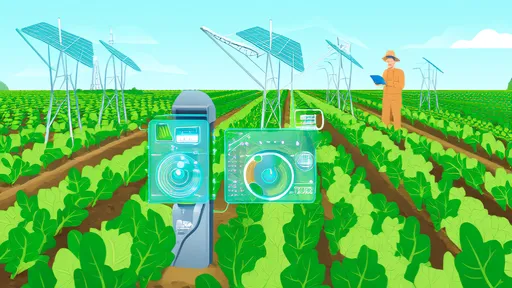
Perhaps the most disruptive force in rapid testing is the integration of digital technology and the Internet of Things (IoT). Modern rapid detection devices are no longer standalone units; they are smart, connected systems. A portable biosensor used at a receiving dock can now instantly wire its results to a cloud-based dashboard, updating food safety records in real-time and triggering automated alerts if a contamination threshold is breached. This creates a seamless flow of information, enabling proactive rather than reactive management of food safety. Furthermore, the adoption of blockchain technology is being explored to create immutable, transparent records from the point of detection all the way to the consumer, building a new level of trust and traceability into the food system.
The implications of these technological leaps are vast and multifaceted. For public health agencies, the ability to conduct widespread, rapid surveillance at production facilities, borders, and retail outlets dramatically shortens the response time during a foodborne illness outbreak. Identifying the source of contamination can now be achieved in hours instead of weeks, potentially preventing hundreds of illnesses and saving lives. For the food industry, these methods translate into enhanced brand protection and operational efficiency. Incoming raw materials can be screened before they even enter the production facility, reducing the risk of a costly recall and the associated reputational damage. This shift from end-product testing to in-process control represents a more robust and economically sound approach to quality assurance.
However, the path forward is not without its challenges. Widespread adoption hinges on overcoming significant hurdles. The cost of developing and manufacturing these sophisticated devices remains high, though it is expected to decrease with further innovation and economies of scale. A critical challenge is validation; any new method must be rigorously tested to prove its reliability and accuracy is equal to or better than the existing laboratory methods to gain regulatory approval from bodies like the FDA or EFSA. Furthermore, the success of these technologies depends on the end-user. Training personnel at processing plants, distribution centers, and even farmers markets to properly use and interpret these tools is essential for their effectiveness. A high-tech device is only as good as the person operating it.
Looking ahead, the trajectory of rapid food safety testing is pointed toward even greater integration, miniaturization, and intelligence. The concept of technology is becoming a reality, where entire laboratory processes are condensed onto a single, miniature chip that can analyze a sample with minimal human intervention. Researchers are also exploring the potential of artificial intelligence and machine learning algorithms to not only interpret complex data from biosensors but also to predict contamination events based on historical and real-time data patterns. This predictive capability could revolutionize food safety, moving the industry from a model of detection to one of prevention.
In conclusion, the development of novel rapid detection methods is fundamentally reshaping the field of food safety. This is not a distant future prospect but an ongoing evolution, with new technologies continually emerging from research labs into commercial application. The convergence of biology, nanotechnology, and digital intelligence is creating a powerful arsenal of tools to protect the global food supply. While challenges in validation, cost, and training persist, the undeniable benefits—swifter pathogen identification, reduced economic waste, and, most importantly, the enhanced protection of public health—make the pursuit of these innovations one of the most critical endeavors in modern food science and technology.

By /Aug 25, 2025

By /Aug 25, 2025
By /Aug 25, 2025
By /Aug 25, 2025

By /Aug 25, 2025

By /Aug 25, 2025
By /Aug 25, 2025

By /Aug 25, 2025

By /Aug 25, 2025
By /Aug 25, 2025

By /Aug 25, 2025

By /Aug 25, 2025
By /Aug 25, 2025

By /Aug 25, 2025
By /Aug 25, 2025
By /Aug 25, 2025
By /Aug 25, 2025
By /Aug 25, 2025
By /Aug 25, 2025
By /Aug 25, 2025
