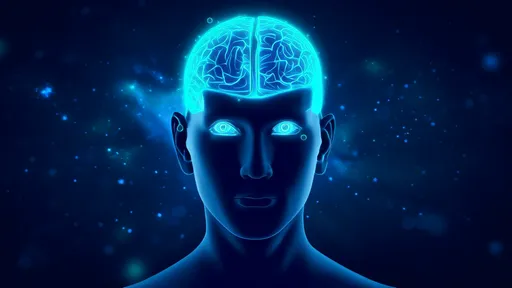
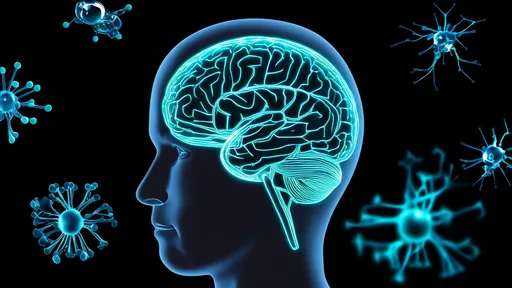
In the quiet corridors of neuroscience laboratories, a profound question echoes through the minds of researchers: where does consciousness reside? The quest to identify the neural correlates of consciousness (NCC) represents one of the most ambitious and elusive endeavors in modern science. It is a pursuit that straddles the boundaries between philosophy, biology, and psychology, seeking to pinpoint the precise mechanisms in the brain that give rise to subjective experience. For centuries, consciousness was considered the domain of philosophers, a ethereal concept beyond empirical reach. Today, armed with advanced imaging technologies and innovative experimental paradigms, scientists are gradually peeling back the layers of this mystery.
The term neural correlates of consciousness refers to the minimal set of neuronal events and mechanisms sufficient for a specific conscious experience. This definition, while pragmatic, belies the complexity involved. How does a three-pound organ composed of billions of neurons generate the rich tapestry of thoughts, sensations, and emotions that define our existence? The challenge is not merely technical but conceptual, forcing a reconciliation between objective measurement and subjective reality.
Early work in this field often relied on clinical observations of patients with brain injuries. Cases of blindsight, where individuals can respond to visual stimuli without conscious perception, or anosognosia, where patients deny their paralysis, provided crucial clues. These phenomena suggested that consciousness is not an all-or-nothing state but a modular process that can be dissociated from sensory input and motor output. They hinted at specific brain regions, like the thalamus or prefrontal cortex, playing pivotal roles in generating awareness.
Modern research has expanded these insights through sophisticated tools like fMRI, EEG, and single-neuron recordings. Studies contrasting conscious and unconscious processing have become a cornerstone of NCC research. Binocular rivalry experiments, where different images are presented to each eye, reveal how perception fluctuates even as sensory input remains constant. Similarly, masking techniques, where a stimulus is rendered invisible by a subsequent mask, allow scientists to compare brain activity with and without conscious awareness.
One influential framework emerging from such studies is the global workspace theory. Proposed by Bernard Baars and later developed by Stanislas Dehaene, this theory posits that consciousness arises when information is globally broadcast to multiple brain systems. It suggests a "theater of the mind" where once information gains access to this workspace, it becomes available to various cognitive processes like memory, attention, and verbal report. Neurobiologically, this is often associated with widespread, synchronized brain activity, particularly in the prefrontal and parietal cortices.
However, the global workspace theory is not without rivals. The integrated information theory (IIT), developed by Giulio Tononi, offers a more mathematical approach. IIT proposes that consciousness corresponds to the capacity of a system to integrate information. The quality of consciousness is determined by the repertoire of causal states available to the system. This theory shifts focus from specific brain regions to the properties of neural networks, emphasizing differentiation and integration. It has sparked both enthusiasm for its rigor and criticism for its testability.
Another perspective comes from the predictive processing framework, which views the brain as a prediction engine. In this model, consciousness might be related to the process of minimizing prediction errors through hierarchical Bayesian inference. Some theorists, like Anil Seth, argue that conscious perception is a controlled hallucination, shaped by prior beliefs and multisensory integration. This approach ties consciousness to the fundamental way the brain interacts with and interprets the world.
Despite theoretical diversity, empirical studies have consistently highlighted certain neural signatures of consciousness. For instance, the P300 wave, an event-related potential occurring around 300 milliseconds after a stimulus, often correlates with conscious perception. Similarly, gamma-band oscillations (30-100 Hz) have been implicated in binding different features of a percept into a coherent whole. These electrophysiological markers, however, are not without controversy, as their necessity and sufficiency for consciousness remain debated.
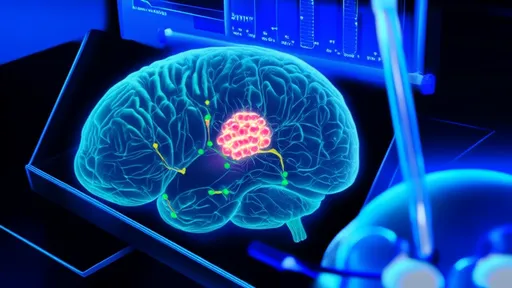
The role of specific brain regions has also been extensively investigated. The ventral visual stream, particularly areas like V1 and the fusiform face area, is crucial for conscious visual perception. Meanwhile, frontoparietal networks appear involved in access consciousness and reportability. Subcortical structures, such as the thalamus and claustrum, have been proposed as potential consciousness switches or integrators. Yet, lesion studies show that no single area is solely responsible; consciousness seems to emerge from distributed, dynamic networks.
Recent years have seen growing interest in altered states of consciousness. Research on sleep, anesthesia, and psychedelics provides unique windows into NCC. During deep sleep or under anesthesia, despite active brain metabolism, consciousness fades. Studies comparing these states to wakefulness reveal changes in functional connectivity, especially in thalamocortical loops. Psychedelics like psilocybin, which dramatically alter conscious experience, are associated with increased entropy and connectivity across the brain, challenging traditional hierarchies.
Moreover, the development of consciousness in infants and its presence in non-human animals raise evolutionary and ethical questions. When does consciousness begin? Which species possess it? These inquiries push the boundaries of NCC research beyond human adults, demanding comparative approaches and careful consideration of behavioral and neural markers.
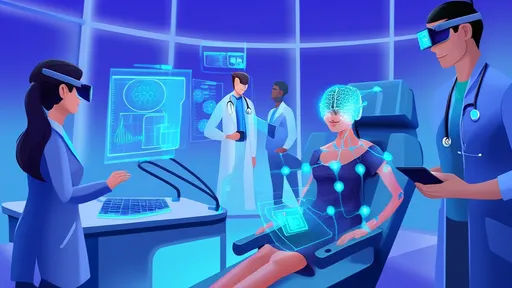
Technological advancements continue to drive the field forward. Brain-computer interfaces now allow decoding of conscious contents from neural activity, blurring the line between reading and interpreting thoughts. High-resolution imaging provides unprecedented views of microcircuits, while optogenetics enables precise manipulation of neuronal populations. These tools not only refine our understanding of NCC but also hold clinical promise for disorders of consciousness.
Patients in vegetative states or with locked-in syndrome represent heartbreaking cases where consciousness is disrupted or trapped. NCC research aims to improve diagnosis and communication for these individuals. By identifying reliable neural markers of awareness, scientists can better detect consciousness in non-responsive patients, guiding ethical decisions and potential treatments.
Yet, the hard problem of consciousness, as philosopher David Chalmers termed it, persists. How do physical processes give rise to subjective experience? While NCC research addresses the easy problems—mechanisms of access, reportability, integration—the qualitative feel of experience remains enigmatic. Some argue that no amount of neural data will fully explain why red feels red or pain feels painful. This has led to renewed interest in panpsychism, illusionism, and other philosophical positions.
Interdisciplinary collaboration is increasingly vital. Neuroscientists partner with physicists to explore quantum theories of consciousness, with computer scientists to develop artificial consciousness, and with ethicists to navigate implications. The Templeton Foundation and other organizations fund large projects aimed at bridging these gaps, recognizing that consciousness may require a paradigm shift beyond current science.
In conclusion, the search for the neural correlates of consciousness is a vibrant, multifaceted endeavor. It has moved from speculative philosophy to empirical science, generating theories, experiments, and debates. While no consensus exists on the exact NCC, progress is undeniable. Each experiment chips away at the mystery, revealing glimpses of how brain activity translates into mind. The journey is far from over, but it is one that promises to reshape our understanding of ourselves and our place in the universe.
As research continues, it not only illuminates the nature of consciousness but also challenges us to reconsider fundamental concepts like reality, self, and life. In exploring the neural underpinnings of experience, we are ultimately exploring what it means to be human. The answers, when they come, may be as transformative as any in scientific history, touching everything from medicine and technology to ethics and art. The exploration of consciousness is not just a scientific quest but a deeply human one, reflecting our eternal desire to comprehend our own existence.
By /Aug 25, 2025
By /Aug 25, 2025
By /Aug 25, 2025
By /Aug 25, 2025
By /Aug 25, 2025

By /Aug 25, 2025
By /Aug 25, 2025

By /Aug 25, 2025

By /Aug 25, 2025

By /Aug 25, 2025

By /Aug 25, 2025

By /Aug 25, 2025

By /Aug 25, 2025

By /Aug 25, 2025

By /Aug 25, 2025

By /Aug 25, 2025

By /Aug 25, 2025

By /Aug 25, 2025
By /Aug 25, 2025

By /Aug 25, 2025
