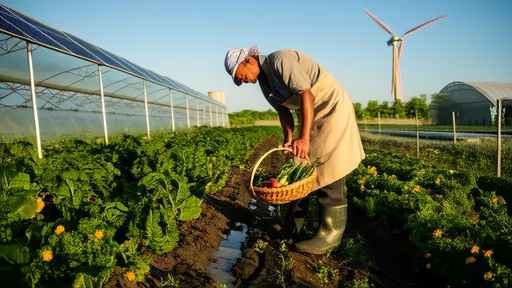
In the heart of rural communities across the globe, a quiet revolution is taking root. Farmers, researchers, and policymakers are increasingly turning their attention to agroecological practices as a pathway toward sustainable agriculture. This shift is not merely a trend but a necessary response to the mounting challenges of climate change, soil degradation, water scarcity, and biodiversity loss. The promotion of ecological farming models represents a fundamental reimagining of how we produce food, prioritizing harmony with nature over short-term yields.
The concept of ecological agriculture, or agroecology, integrates traditional knowledge with modern scientific insights to create farming systems that work with natural processes. Unlike conventional monocultures reliant on synthetic inputs, these models emphasize diversity, resilience, and closed-loop systems. By mimicking natural ecosystems, farms can become more productive and sustainable in the long run. For instance, polyculture systems—growing multiple crops together—reduce pest outbreaks and improve soil health through complementary plant interactions.
One of the most compelling aspects of ecological farming is its ability to enhance biodiversity. Traditional industrial agriculture often simplifies landscapes, leading to habitat destruction and species decline. In contrast, agroecological practices such as crop rotation, intercropping, and maintaining hedgerows create habitats for beneficial insects, birds, and microorganisms. This biodiversity not only supports pollination and natural pest control but also contributes to overall ecosystem stability. Farmers who adopt these methods frequently report healthier crops and reduced dependency on chemical pesticides.
Water management is another critical area where ecological models excel. Techniques like rainwater harvesting, contour farming, and the use of cover crops help conserve water and prevent erosion. In regions prone to drought, these practices can make the difference between crop failure and resilience. Moreover, by improving soil organic matter through composting and reduced tillage, farms enhance their water retention capacity, ensuring that every drop counts during dry spells.
Soil health lies at the core of sustainable agriculture. Conventional farming has often degraded soils through excessive plowing and chemical use, leading to erosion and loss of fertility. Ecological farming reverses this trend by focusing on building healthy soil ecosystems. Practices such as no-till farming, application of organic fertilizers, and planting nitrogen-fixing cover crops rejuvenate the soil. Healthy soil not only supports robust plant growth but also sequesters carbon, helping mitigate climate change.
The economic viability of ecological farming is frequently questioned, yet evidence suggests that it can be both profitable and resilient. While transition periods may require investment and adaptation, long-term benefits include reduced input costs, higher premium prices for organic products, and improved risk management against climate shocks. Smallholder farmers, in particular, stand to gain from these models, as they rely less on expensive external inputs and more on locally available resources.
Despite its promise, the widespread adoption of ecological agriculture faces significant barriers. Lack of knowledge, inadequate policy support, and market challenges often hinder farmers from making the switch. Extension services play a crucial role in bridging this gap by providing training and demonstrations. Governments can accelerate the transition through subsidies for sustainable practices, research funding, and creating markets for eco-friendly products. Consumer awareness and demand for sustainably produced food are also powerful drivers for change.
Around the world, successful examples of ecological farming abound. From the terraced rice paddies of Asia that integrate fish and ducks to the agroforestry systems of Latin America combining trees with crops and livestock, these models showcase the adaptability and innovation inherent in agroecology. In Africa, farmer-led initiatives using push-pull technology to control pests without chemicals have doubled yields while improving soil fertility. These stories highlight the potential for ecological agriculture to address food security while protecting the environment.
The future of agriculture depends on our ability to embrace systems that nourish both people and the planet. Ecological farming offers a proven path forward, blending time-honored wisdom with contemporary science. As challenges like population growth and climate change intensify, the need for sustainable solutions becomes ever more urgent. By supporting farmers in adopting these practices, we can cultivate a food system that is productive, equitable, and resilient for generations to come.
In conclusion, the promotion of ecological agricultural models is not just an alternative but a imperative for sustainable development. It calls for a collective effort from all stakeholders—farmers, consumers, businesses, and governments—to create an enabling environment for this transformation. The seeds of change have been sown; now is the time to nurture them into a thriving, sustainable future.

By /Aug 25, 2025

By /Aug 25, 2025

By /Aug 25, 2025

By /Aug 25, 2025

By /Aug 25, 2025

By /Aug 25, 2025

By /Aug 25, 2025

By /Aug 25, 2025

By /Aug 25, 2025

By /Aug 25, 2025

By /Aug 25, 2025

By /Aug 25, 2025

By /Aug 25, 2025

By /Aug 25, 2025

By /Aug 25, 2025

By /Aug 25, 2025
By /Aug 25, 2025

By /Aug 25, 2025
By /Aug 25, 2025

By /Aug 25, 2025
